
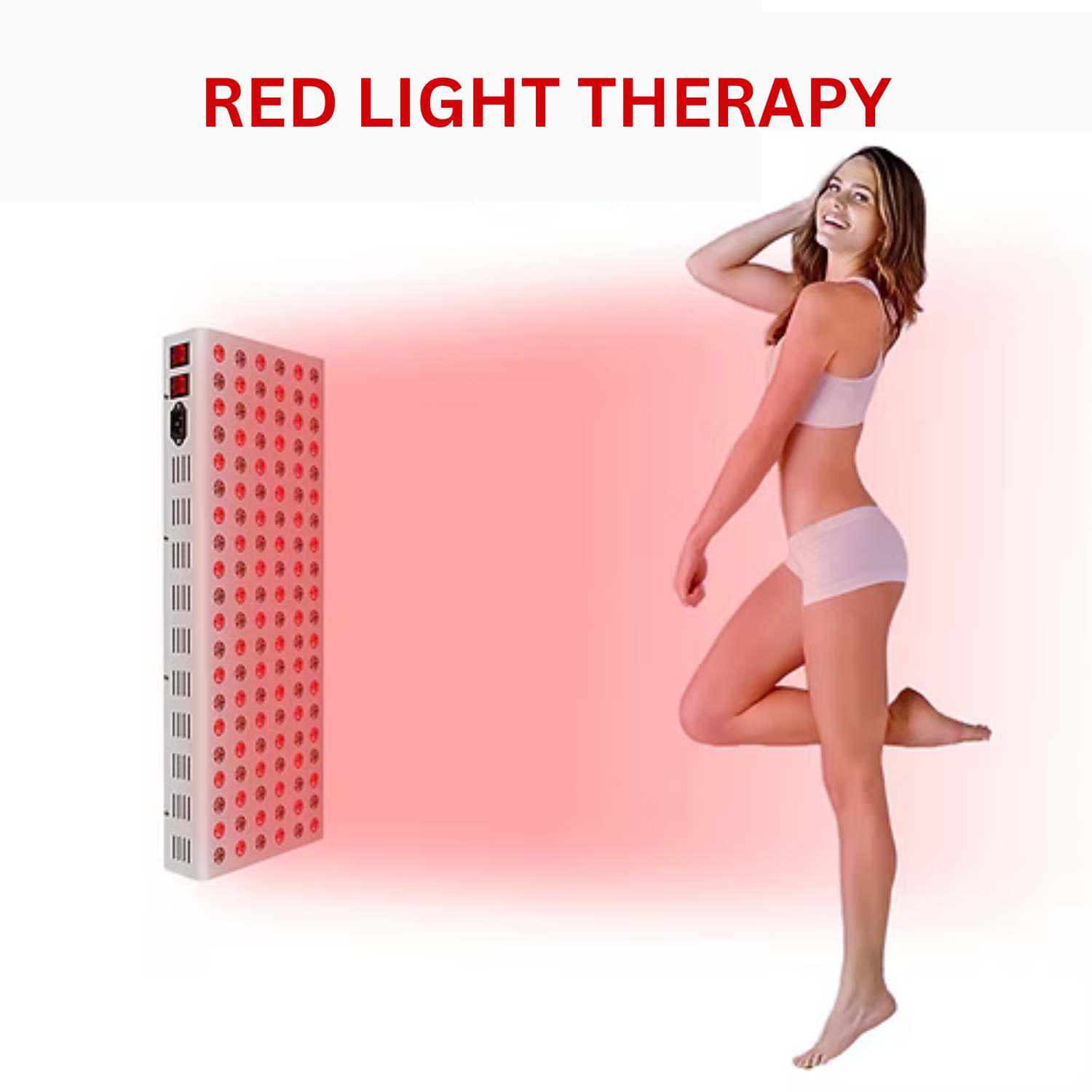


Red Light Therapy Body Skin Beauty & Health Restoration Panels
Price range: AUD$330.00 through AUD$1,880.00
On a super technical level, red light therapy causes a photochemical reaction within our cells. Chromophores (which are responsible for a molecule’s colour) in our mitochondria absorb photons from red and infrared light, causing electrons in those chromophores to get excited and jump into a higher-energy orbit.
As a result, our body can use this new stored energy for a variety of cellular tasks, which then have wide-ranging benefits for our health.
PLEASE NOTE: Please contact us for a postage quote for this product. Call Sharada on 0412 190 909. This product is heavy and postage will vary depending on your location. Postage quotes are required on this product.
- Description
- Additional information
- Joint Pain & Rheumatoid Arthritis
- Thyroid Disorders
- Disclaimer
- Terms and Conditions
Description
WHAT IS RED LIGHT THERAPY AND NEAR-INFRARED LIGHT?
THERAPY/ PHOTOBIOMODULATION
Red and near-infrared light are part of the electromagnetic spectrum, and more specifically, part of the spectrum of light emitted by the sun (and also fire light). These wavelengths of light are “bioactive” in humans. That means that these types of light affect the function of our cells.
It is the red and near-infrared wavelengths specifically that have these amazing effects on our bodies. (Interestingly, even within that range, not all the red and near-infrared wavelengths seem to be created equal.
Specifically, most research showing benefits of red light and near-infrared light has used wavelengths in the narrow ranges of 630-680nm and 800-880nm.)
While most other wavelengths of light (such as UV, blue, green, and yellow light, etc.) are mostly unable to penetrate the body and stay in the layers of the skin, near-infrared light and red light can reach deep into the human body (several centimeters, and close to 2 inches, in some cases) and can directly penetrate into the cells, tissues, blood, nerves, the brain, and into the bones.
Most of us already know that certain wavelengths can be harmful at high exposures (like ultraviolet rays from the sun, or gamma rays from radioactive decay). But, it turns out that some wavelengths can also be extremely beneficial for our health! In particular, the wavelengths in the mid-600s nm and low-800s nm (encompassing red light and some infrared) have extreme therapeutic value, due to their ability to easily pass through human tissue (getting absorbed to a depth of about 8 to 10 mm). When applied at low levels to our bodies, light from the red and near-infrared spectrum is known as red light therapy. (Unlike light therapies designed to intentionally damage tissue [such as using lasers for ablation, thermal coagulation, or cutting], red light therapy involves power densities too low to actually heat and damage the tissue.)
Red Light Therapy can greatly benefit people with autoimmune disease.
In the scientific literature, red light therapy is often referred to as photobiomodulation or low-level laser therapy (LLLT). Even though these aren’t exactly household terms, this type of therapy has been around since the 1960s, when a Hungarian researcher named Endre Mester discovered that shining low-level laser light on shaved mice caused their hair to grow back more quickly (and also stimulated wound healing)! By the 1970s, Mester was using low-level lasers on humans to help treat non-healing skin ulcers. In the decades since then, research on this therapy has grown to include various skin benefits (including wrinkle reduction!), weight loss, oral health improvement, arthritis reduction, better sleep quality, a lessening in autoimmune symptoms, and more!
HOW DOES RED LIGHT THERAPY WORK?
One of the most amazing effects of red light is its ability to increase adenosine triphosphate (ATP) production in the mitochondria by activating an enzyme called cytochrome c oxidase (Cox) that plays a role in generating ATP synthase (the enzyme that produces ATP). ATP is the major energy currency of our cells, and when red light increases its levels in our tissue, we essentially have more of this currency to use for transporting energy needed for all of the metabolic activities of our cells!
As a consequence of this ATP boost, we can experience more rapid healing and muscle recovery (in fact, some research shows that red light therapy can enhance athletic performance by improving recovery and tissue repair!). Research has also demonstrated that red light therapy can help modulate reactive oxygen species (ROS) and induce transcription factors that play a role in protein synthesis, cytokine modulation, cell proliferation, growth factors, tissue oxygenation, and inflammatory mediators.
Importantly, immune cells are strongly affected by red light therapy (helping explain why this type of therapy has such major benefits for healing). Mast cells, in particular, degranulate in response to red-spectrum wavelengths (degranulation involves releasing certain molecules, often cytotoxic ones, from the cells’ secretory vesicles). As a result, the pro-inflammatory cytokine TNF-α gets released from cells and leukocytes (white blood cells) are better able to infiltrate the body’s tissues to promote healing. Red light therapy also helps activate lymphocytes and increases the motility of epithelial cells, helping wound sites to close up more quickly.
On top of that, red light therapy has been shown to enhance the production of basic fibroblast growth factor, as well as increase the proliferation, maturity, and motility of fibroblasts (a type of cell that produces collagen and extracellular matrix). Red Light can actually increase our collagen production and deliver all the skin and joint benefits that come as a result.
Sadly, autoimmune diseases affect the lives of over 23 million Americans. Autoimmune diseases include illnesses throughout the body, such as:
- skin (psoriasis)
- joints (rheumatoid arthritis)
- nervous system (multiple sclerosis)
- gut (ulcerative colitis and Crohn’s disease)
- endocrine system (type 1 diabetes and thyroid disease).
Photobiomodulation (light therapy) has been clinically proven to benefit all of the symptoms mentioned above.
Beyond the ability of red light therapy to improve immune function, there is clinical trial evidence that red light therapy can improve specific autoimmune conditions. The science is particularly strong for hypothyroidism (most commonly caused by Hashimoto’s thyroiditis) and joint pain (especially caused by rheumatoid arthritis).
Additional information
| SIZE | ULTRAMINI60, ULTRAPM300, ULTRAVIG500, ULTRAVIG750, ULTRAVIG1000, ULTRAVIG1500, ULTRARS1800 |
|---|
Joint Pain & Rheumatoid Arthritis
As early as the 1990s, red light therapy was introduced as an alternative to more invasive treatments for rheumatoid arthritis.
The pain- and stiffness-relieving effects of red light therapy are most likely due to its anti-inflammatory effects (in fact, it’s not uncommon for people to feel a reduction in joint pain almost immediately from a red light therapy session), and in some cases, due to its ability to stimulate collagen production (by enhancing the production of basic fibroblast growth factor as well as fibroblasts, a type of cell that creates collagen and extracellular matrix).
The release of nitric oxide (NO) from cells during light therapy also stimulates vasodilation, which plays a huge role in joint inflammation and arthritis. Pain in the knees, fingers, hands, wrists, shoulders, back, elbows, neck, jaw, ankles, feet, and toes have all been shown to benefit from direct exposure to light from the red or near-infrared spectrum!
But, just how much relief can red light therapy deliver? A Cochrane Review analyzed five placebo-controlled trials (with a total of 222 patients with rheumatoid arthritis) and found that relative to the control group, low level laser therapy reduced pain by a whopping 70%! That’s a remarkable improvement.
Not only that, but the treatment reduced the duration of morning stiffness by 27.5 minutes, and increased tip to palm flexibility by 1.3cm. A more recent meta-analysis of 22 trials found that when using appropriate energy doses, and when applied directly to affected areas, low level laser therapy could be a good alternative to NSAIDs in terms of relieving joint pain (with similar effectiveness but without the side effects). A 2017 literature review from Germany concluded that this type of therapy could be an “effective, non-invasive, safe and cost-efficient means” to treat a variety of musculoskeletal conditions, including inflammatory joint disorders like chronic degenerative osteoarthritis and rheumatoid arthritis.
So, it seems red light therapy could be a serious blessing for those of us with joint disorders. What we’ve learned from existing studies is that applying red light directly on (or near) the arthritic area (or in the case of rheumatoid arthritis, using the light directly over a nearby vein) will help reduce inflammation, increase joint mobility, and reduce stiffness significantly. For anyone who suffers from joint pain (and who knows how much it can interfere with day-to-day life), red light therapy combined with a diet and lifestyle that supports joint health could be the ticket to far greater physical freedom.
Thyroid Disorders
One of the clinically demonstrated benefits associated with red light therapy is on autoimmune hypothyroidism (also called chronic autoimmune thyroiditis). A 2013 randomized, placebo-controlled trial enrolled 43 adults with chronic autoimmune thyroiditis, all of who had a history of taking levothyroxine (a manufactured form of the thyroid hormone T4, or thyroxine). Those volunteers were then randomly assigned to either a placebo group (where they received 10 sessions of a placebo treatment) or an infrared light therapy group (where they received 10 sessions of low-level laser treatment, using a wavelength of 830 nm and an output power of 50 mW). Thirty days after the treatment sessions were over, the volunteers were taken off levothyroxine and followed for nine months, during which the researchers reintroduced as much levothyroxine as needed in order for the participants to achieve normal levels of T3, T4, free-T4, and thyrotropin.
The results? Compared to the placebo group, the light therapy group saw significant reduction in how much levothyroxine they needed to take (and even more impressive, many of the participants in that group didn’t need any more levothyroxine at all to have healthy thyroid markers!). Likewise, autoimmunity (assessed by measuring thyroid peroxidase antibodies (TPOAb)) was significantly lower in the light therapy group. Basically, the near-infrared light therapy caused major improvements in thyroid health.
And, that’s not the only study suggesting a major benefit of red light for thyroid disease. This study confirmed what was previously seen in the initial pilot study, which found that all 15 participants who underwent near-infrared light therapy were able to reduce or discontinue their levothyroxine usage during the nine months following treatment (along with having reduced TPOAb levels). Another analysis by the same researchers found a statistically significant increase in TGF-B1 levels among the participants receiving the light treatment, giving evidence for its anti-inflammatory effect. Even more exciting, the larger placebo-controlled study recently completed a long-term follow-up (six years) showing that the thyroid benefits of near-infrared light persisted over time and didn’t come with any safety risks.
So, how might red light exert effects on the thyroid gland? Scientists are still investigating the mechanisms, but a few possibilities already exist.
Red light has already been proven to act upon various components of the immune system, so it wouldn’t be a stretch to think it could help regulate the dysfunction found in autoimmune diseases. In fact, some researchers suggest that the similar processes involved in autoimmune diseases and inflammatory diseases (aberrant reactions from the innate or adaptive immune systems) offer a clue: since red light therapy has a well-demonstrated benefit for inflammation, the same mechanisms that underlie its effect on inflammatory processes could underlie its effect on autoimmunity. (Likewise, red light therapy may help promote T4 to T3 conversion by reducing levels of the stress hormone cortisol, which inhibits this conversion and can lower thyroid hormone production by decreasing TSH.)
Red light also has the ability to regenerate tissues, and in animals, has been shown to improve microcirculation in the thyroid and raise T3 and T4 levels—all of which could help explain the similar effects we see in humans. Also, because certain red and near-infrared light wavelengths increase ATP production in the mitochondria (see above), improved local energy availability may play a role in helping the thyroid gland produce more natural thyroid hormone.
For people with hypothyroidism resulting from chronic autoimmune thyroiditis, the effects of red light therapy are extremely good news! Typically, people who develop this condition are told they’ll have to be on medication for the rest of their lives.
The fact that red light therapy not only reduces the dose of thyroid medication people need, but in many cases (47% of the participants in the existing studies!) lets them go off medication entirely, shows the tremendous therapeutic potential of these special light wavelengths.
If you suffer from autoimmune hypothyroidism, red light therapy is something to seriously consider.
In order for red light therapy to work, a number of variables (including power density, wavelength, dosage, and pulse structure) need to be in an optimal “sweet spot” that delivers the therapeutic benefit. Anything outside this sweet spot will be less effective (and in some cases, won’t show any benefit at all!).
In fact, when it comes to red light therapy, the effects are neither linear nor in a bell curve as we move across the wavelength spectrum; the best absorption by our tissues peaks in the ranges of 660-670 nm and 830-850 nm, and therapies that use wavelengths between these two peaks will have little biological effect. (So, we can’t operate on the logic that if a red light at 670 nm delivers measurable health benefits, then a light at 750 nm will be even better… the reality is actually the opposite!)
Disclaimer
The Ultramaxx Panel is not a device to cure cancer or any other disease.
Ultramaxx does not claim any medical benefits and does not claim to cure any disease or medical condition.
It does not claim any diagnosis or treatment and only claims the statements in the Medical Device of the FDA’s regulation.
Specific medical advice should be obtained from a licensed health care practitioner.
Any information and personal testimonies about the Ultramaxx Panel do not reflect Ultramaxx’s claim.
Terms and Conditions
By buying an item, you confirm that you agree to our terms and conditions:
RETURNS
Returns are accepted within 30 days from receipt of purchase in the same condition as when dispatched.
PAYMENT
Preferred payment methods are PayPal or direct deposit. We also accept Visa and Mastercard. Your item will only be sent when funds are cleared into our bank account
GST
GST is not included on the purchase price. It is included when paying at checkout.
Related products
-

Medium – Amethyst Ultramat – Gold
AUD$1,299.00 Add to cart -

Bio Amethyst + 9 Natural Crystals with PEMF Negative IONS Sauna Cocoon
AUD$2,500.00 Add to cart -

Tourmaline And Jade Crystals Lifestyle Ultramat With Far Heat & Neg Ions
AUD$799.00 Add to cart -

Bio Chakra Cleansing Rainbow Crystal Mat PRO (with 7 therapeutic gemstones)
AUD$1,650.00 Add to cart